Easy Parmesan Risotto Recipe: Creamy, Comforting, and Foolproof

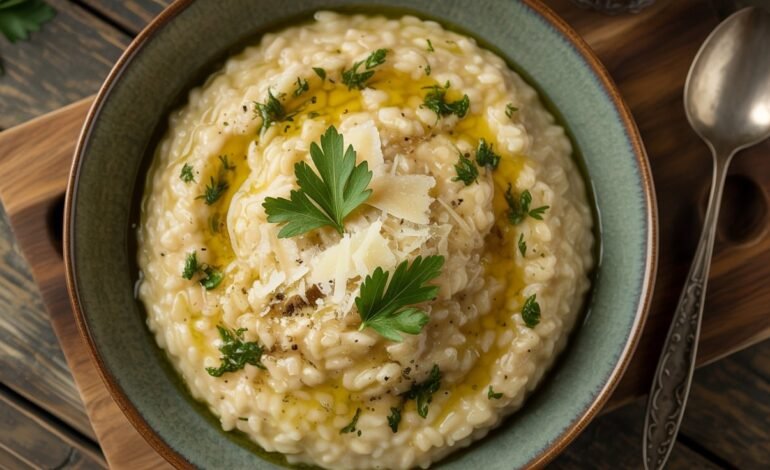
Risotto has a reputation for being fussy, but the truth is anyone can master it with the right technique. This Easy Parmesan Risotto Recipe proves that you don’t need years of Italian cooking experience to make a restaurant-worthy dish at home. Creamy, comforting, and deeply satisfying, risotto makes a perfect side or even a main dish when paired with proteins. In this guide, you’ll learn exactly how to make risotto creamy, what ingredients you need, common mistakes to avoid, and a few delicious variations like creamy garlic Parmesan risotto or risotto recipes no wine.
What Makes Risotto Special?
Unlike regular rice dishes where grains cook freely in water, risotto uses a unique technique: slowly adding warm broth to starchy rice while stirring constantly. This releases the rice’s natural starches, creating a rich, velvety texture without heavy cream.
- Rice choice matters: Arborio, Carnaroli, or Vialone Nano are best. Their high starch content delivers the creaminess risotto is famous for.
- Liquid technique: Broth must be added gradually, one ladle at a time. Cold broth shocks the rice and ruins the consistency.
- Consistency: Proper risotto should be creamy but not soupy, with rice grains tender on the outside yet slightly firm (al dente) inside.
This is why risotto is considered an Italian art form—and why getting it right feels like such an accomplishment.
Ingredients You’ll Need
Making risotto requires only a handful of basic ingredients. Here’s what you need for a classic creamy Parmesan risotto recipe:
- 1 ½ cups Arborio rice (or Carnaroli for extra creaminess)
- 4–5 cups chicken or vegetable broth (kept warm)
- 1 small onion or shallot, finely chopped
- 2 tbsp olive oil or unsalted butter
- ½ cup dry white wine (optional, skip for risotto recipes no wine)
- ¾ cup grated Parmesan cheese (freshly grated works best)
- 2 cloves garlic, minced (for creamy garlic Parmesan risotto)
- Salt and black pepper, to taste
- Fresh parsley, for garnish
Optional: a drizzle of truffle oil, lemon zest, or sautéed mushrooms to customize the flavor.
Step-by-Step Cooking Instructions
-
Prepare the broth
- Heat broth in a small saucepan and keep it warm on low heat. This ensures consistent cooking and prevents shocking the rice.
-
Sauté aromatics
- In a large skillet or pan, heat olive oil or butter. Add onion (and garlic if making garlic Parmesan risotto). Cook until translucent, about 3 minutes.
-
Toast the rice
- Add Arborio rice and stir for 2–3 minutes until the edges look slightly translucent. This step deepens the flavor and prepares the rice to absorb liquid.
-
Deglaze with wine (optional)
- Pour in white wine and stir until absorbed. If avoiding alcohol, skip this step and add broth directly.
-
Add broth gradually
- Add one ladle of warm broth at a time, stirring continuously. Wait until liquid is almost absorbed before adding more. Repeat for 18–20 minutes.
-
Finish with Parmesan
- When rice is creamy and al dente, remove from heat. Stir in grated Parmesan and a small knob of butter. Adjust seasoning with salt and pepper.
-
Serve immediately
- Plate warm risotto in shallow bowls, garnish with parsley, and top with extra Parmesan.
Tips for Creamy Success
Even though risotto is simple, a few mistakes can ruin the texture. Here’s how to guarantee success:
- Don’t rinse rice: Washing removes starch, the very thing that makes risotto creamy.
- Use warm broth: Cold broth halts cooking and causes uneven texture.
- Stir frequently, not constantly: Too much stirring makes risotto gummy, too little prevents starch release.
- Taste-test doneness: Rice should be tender but slightly firm at the core, not mushy.
- Serve immediately: Risotto waits for no one; it thickens as it sits.
Variations You Can Try
One of the best things about risotto is its versatility. Here are some delicious variations:
- Creamy Garlic Parmesan Risotto: Add 3–4 minced garlic cloves when sautéing onions.
- Mushroom Risotto: Sauté mushrooms separately, then fold them in before adding Parmesan.
- Lemon-Parmesan Risotto: Add 1 tsp lemon zest and 1 tbsp juice at the end for brightness.
- Risotto Recipes No Wine: Replace wine with an extra splash of broth.
- Spinach and Parmesan Risotto: Stir in fresh spinach leaves during the last 2 minutes of cooking.
Pairings: What to Serve with Risotto
Risotto is versatile enough to be a main or side dish.
- Proteins: Grilled chicken, pan-seared salmon, or roasted shrimp.
- Vegetables: Roasted asparagus, zucchini, or sautéed spinach.
- Wine: Pair with Pinot Grigio or Sauvignon Blanc (if wine is used in cooking).
Nutritional Breakdown (per serving, approx.)
| Nutrient | Amount | Notes |
|---|---|---|
| Calories | 320–350 | Based on standard serving size |
| Protein | 10–12 g | From Parmesan cheese |
| Carbs | 55–60 g | From Arborio rice |
| Fat | 8–10 g | From cheese and butter |
| Fiber | 1–2 g | Minimal, can add veggies for more |
Risotto is not low-carb, but its richness makes small portions satisfying.
Storage & Reheating Tips
Risotto is best served fresh, but you can store leftovers safely:
- Storage: Keep in an airtight container in the fridge for up to 3 days.
- Reheating: Reheat gently on the stove with a splash of broth or milk to restore creaminess. Avoid microwaving, as it dries out.
- Make-ahead tip: Cook risotto 80% of the way, then finish with broth and Parmesan right before serving.
Conclusion
This Easy Parmesan Risotto Recipe is proof that a dish often seen as intimidating can actually be simple and rewarding. With just a handful of ingredients and some patience, you’ll create a creamy, comforting dish that feels like an Italian restaurant classic. Whether you enjoy it as a main dish with vegetables or as a side to roasted meats, risotto is a recipe worth mastering.
So grab a pot, pour yourself a glass of wine, and bring the taste of Italy into your kitchen tonight.
FAQs
1. Can I make risotto without wine?
Yes. Replace wine with extra broth or a splash of lemon juice for brightness. This is common in many risotto recipes no wine.
2. What’s the best rice for risotto?
Arborio is most common, but Carnaroli and Vialone Nano are often preferred in Italy for their creaminess and ability to stay firm.
3. How do I keep risotto creamy when reheating?
Always add a splash of warm broth or milk while reheating on the stove. This restores the creamy consistency.